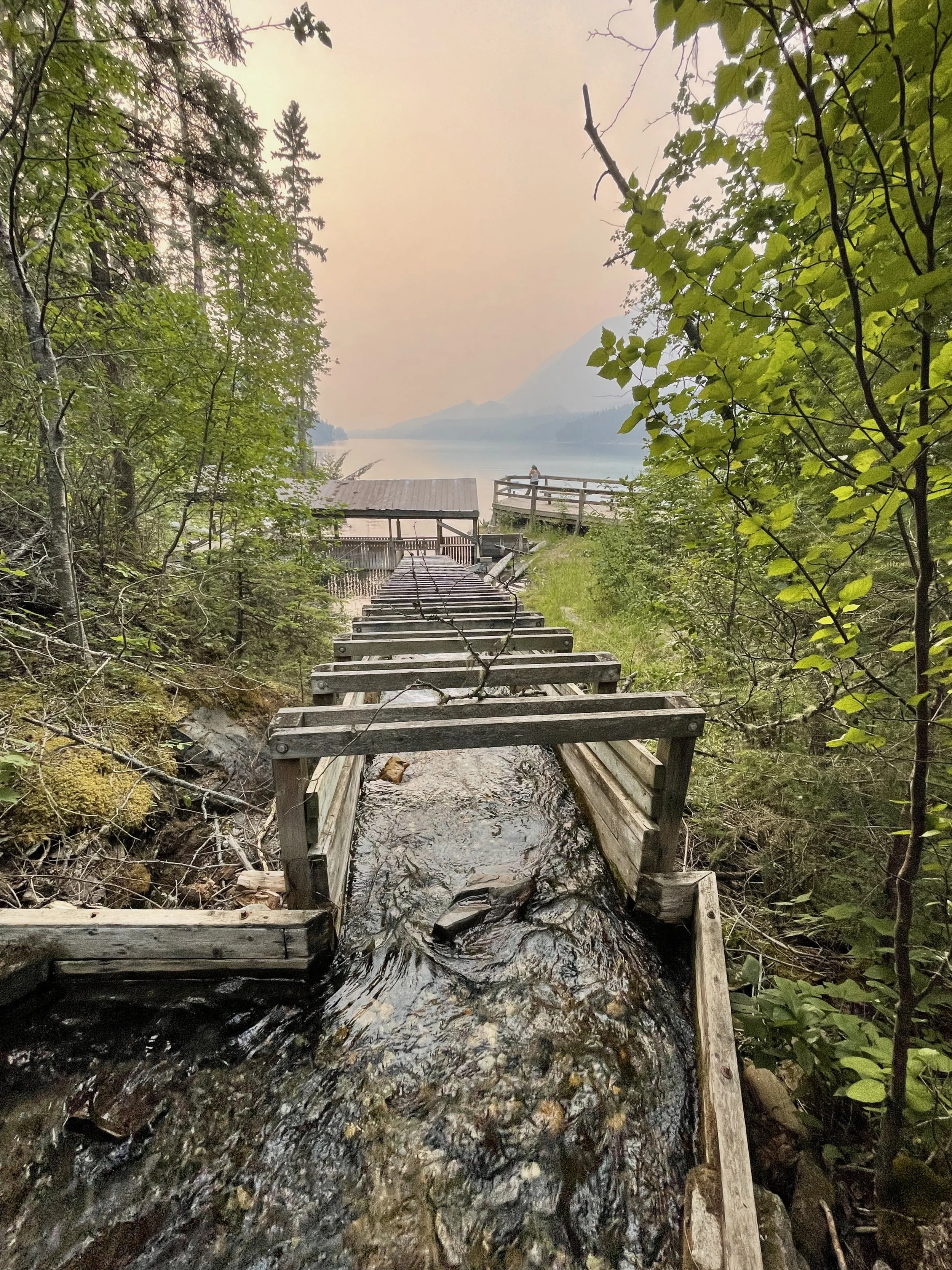
Ecvacuate, BC Provincial Park. Digital Photograph.
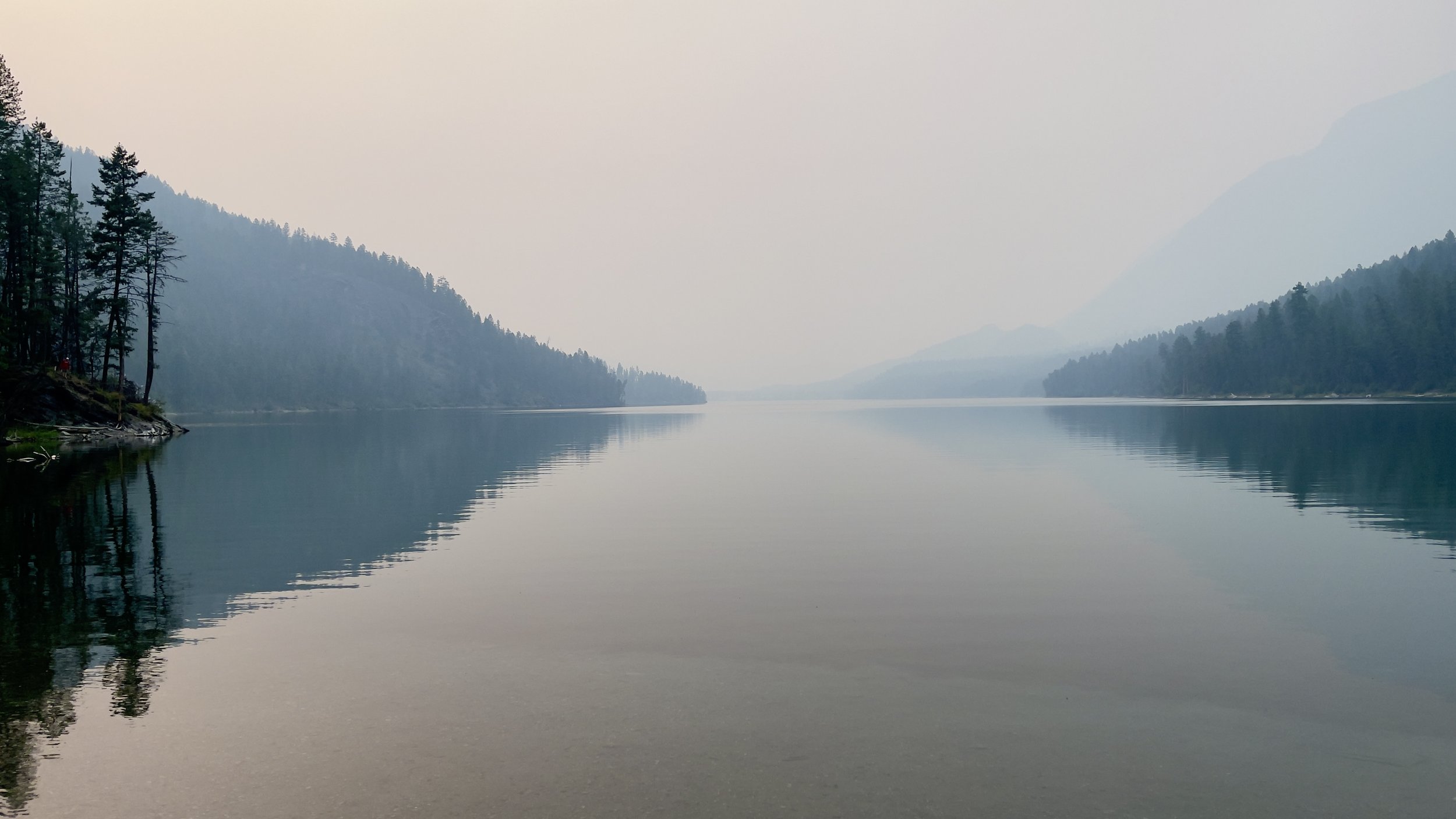
Evacuation II. BC Provincial Park. Digital Photograph.
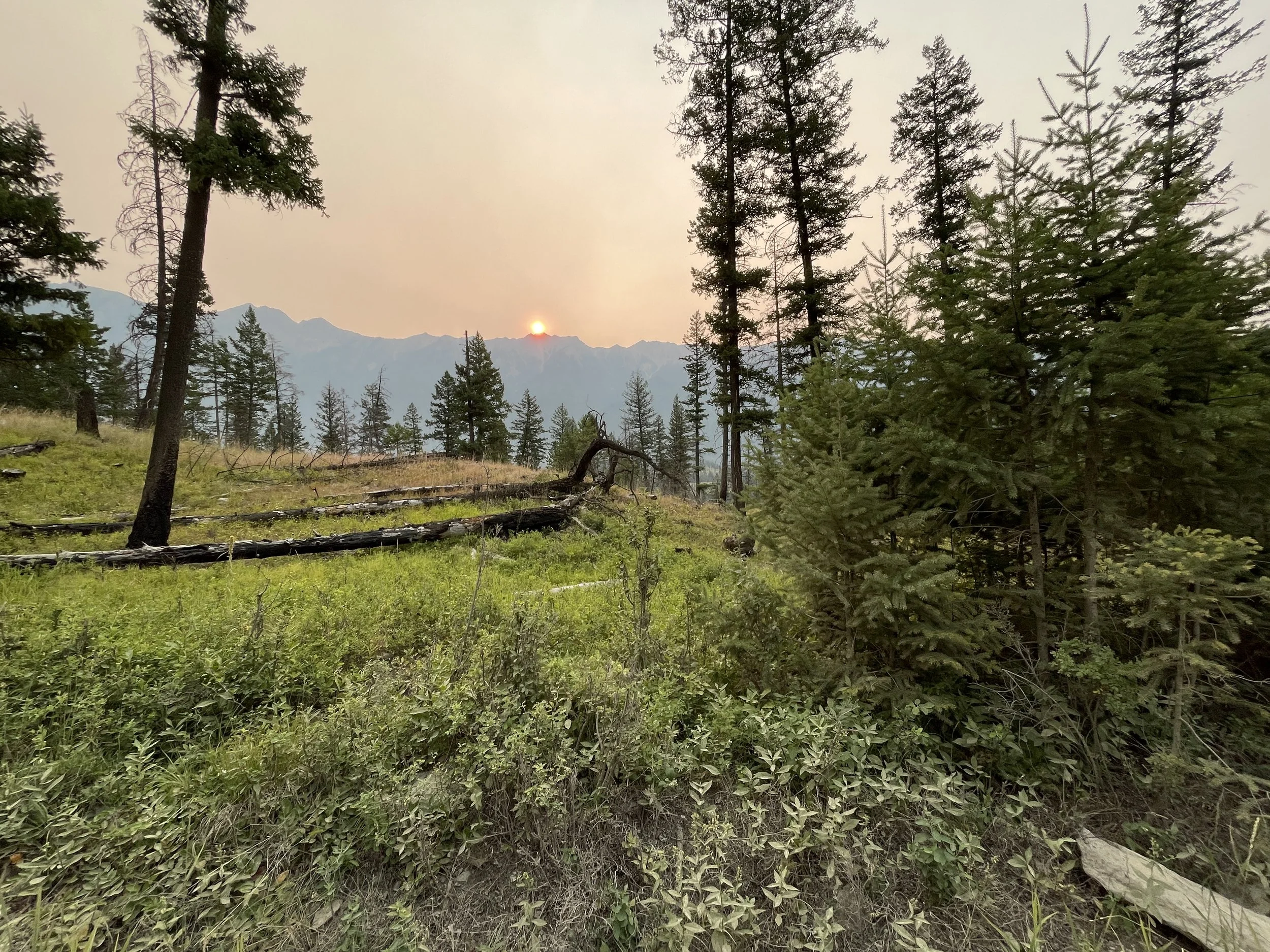
Sunrise, BC Provincial Park. Digital Photograph.
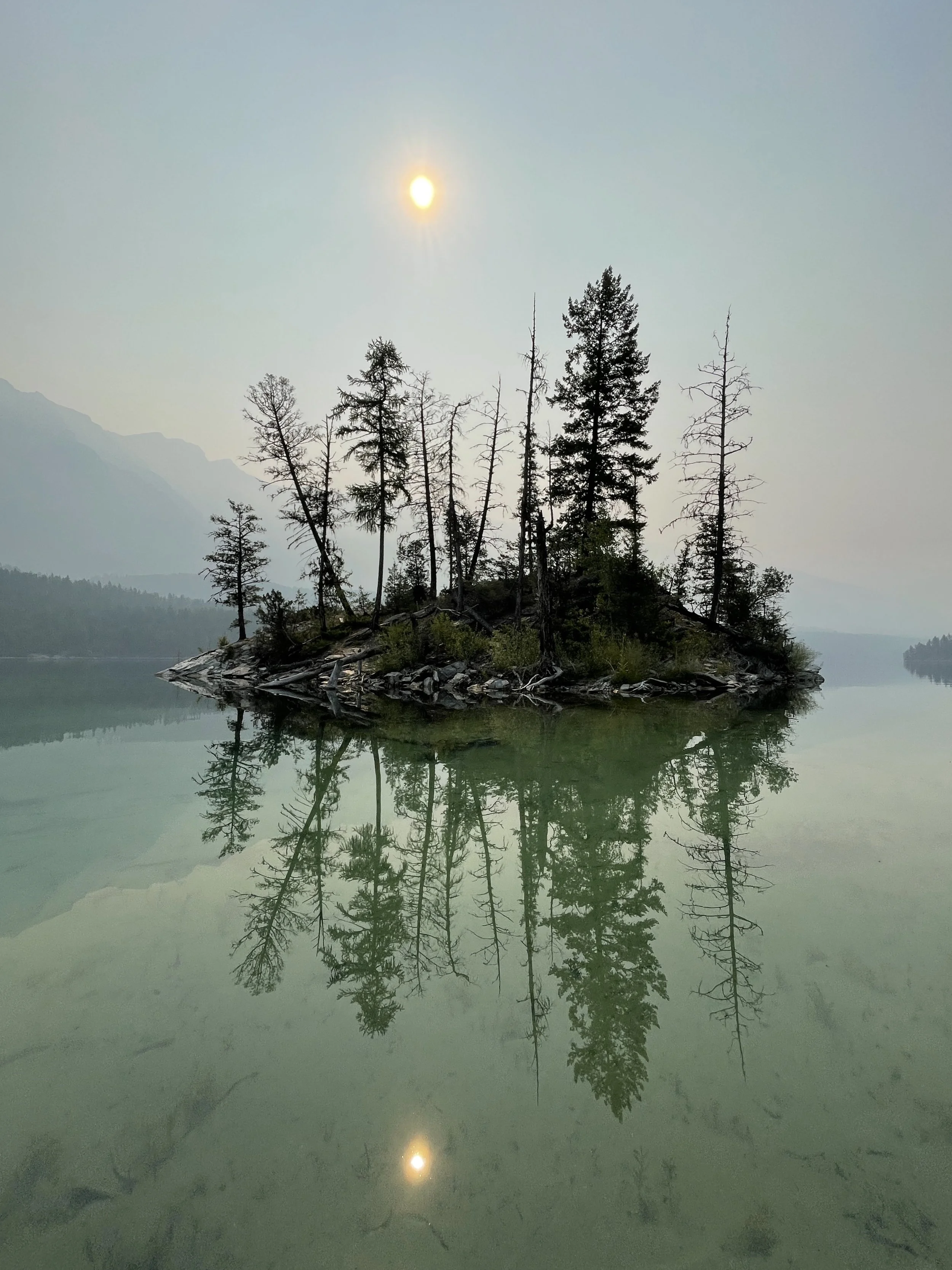
Noon. BC Provincial Park. Digital Photograph.
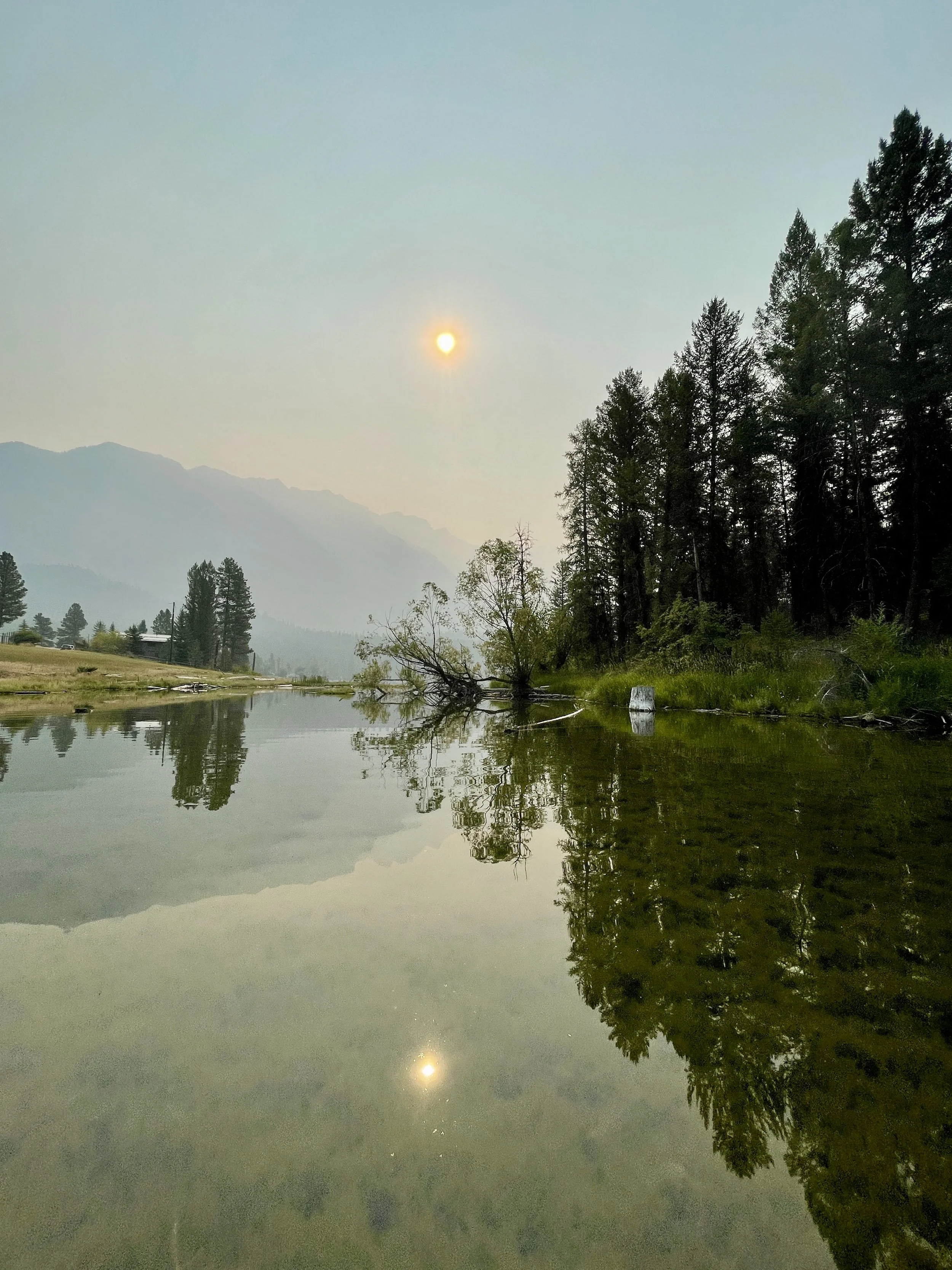
Noon II. BC Provincial Park. Digital Photograph.

Sundown, BC Provincial Park. Digital Photograph.

Ridge Fire. Radium BC. Digital Photograph.
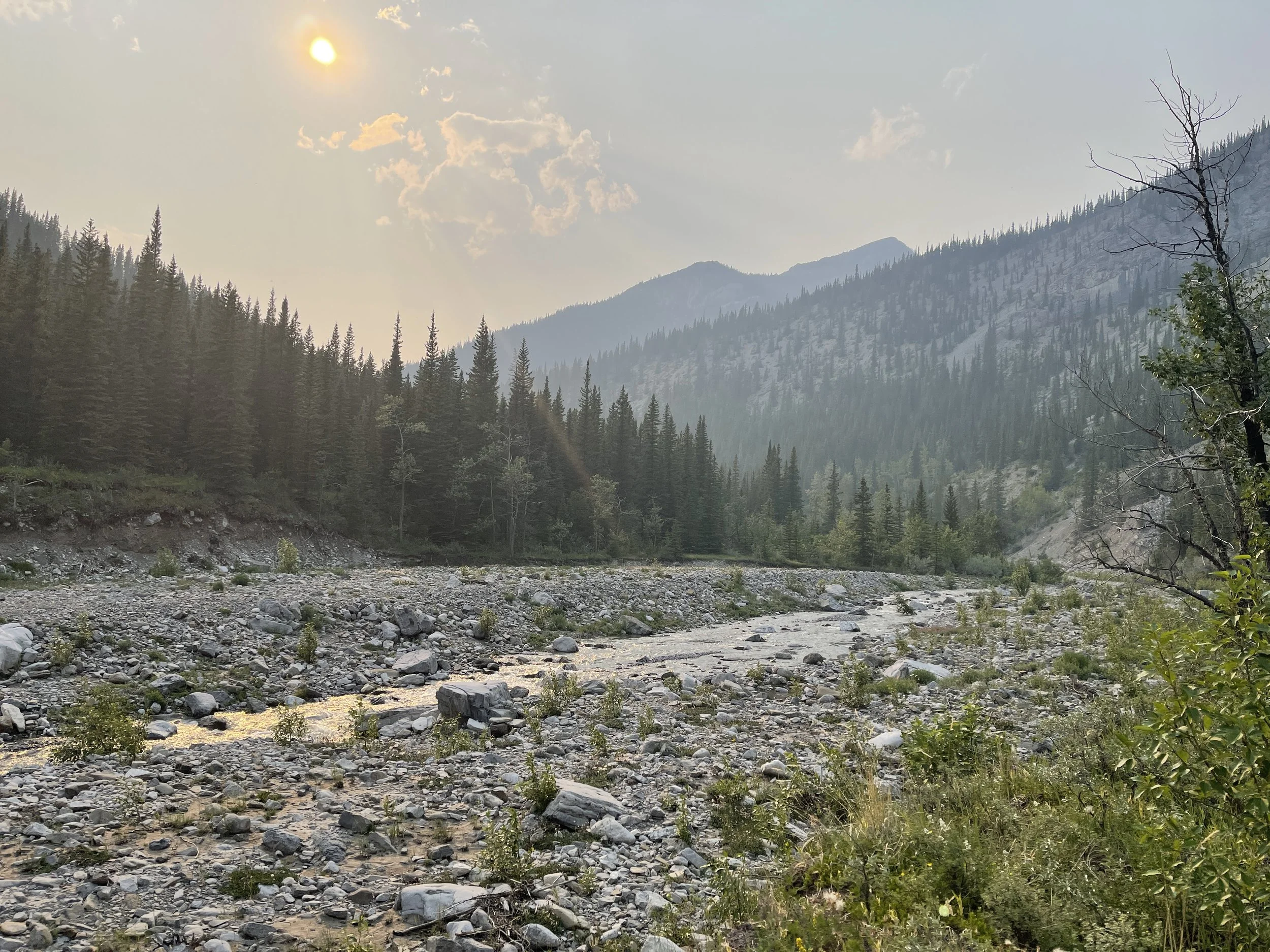
Ice Caves, Kananaskis Alberta. Digital Photograph.
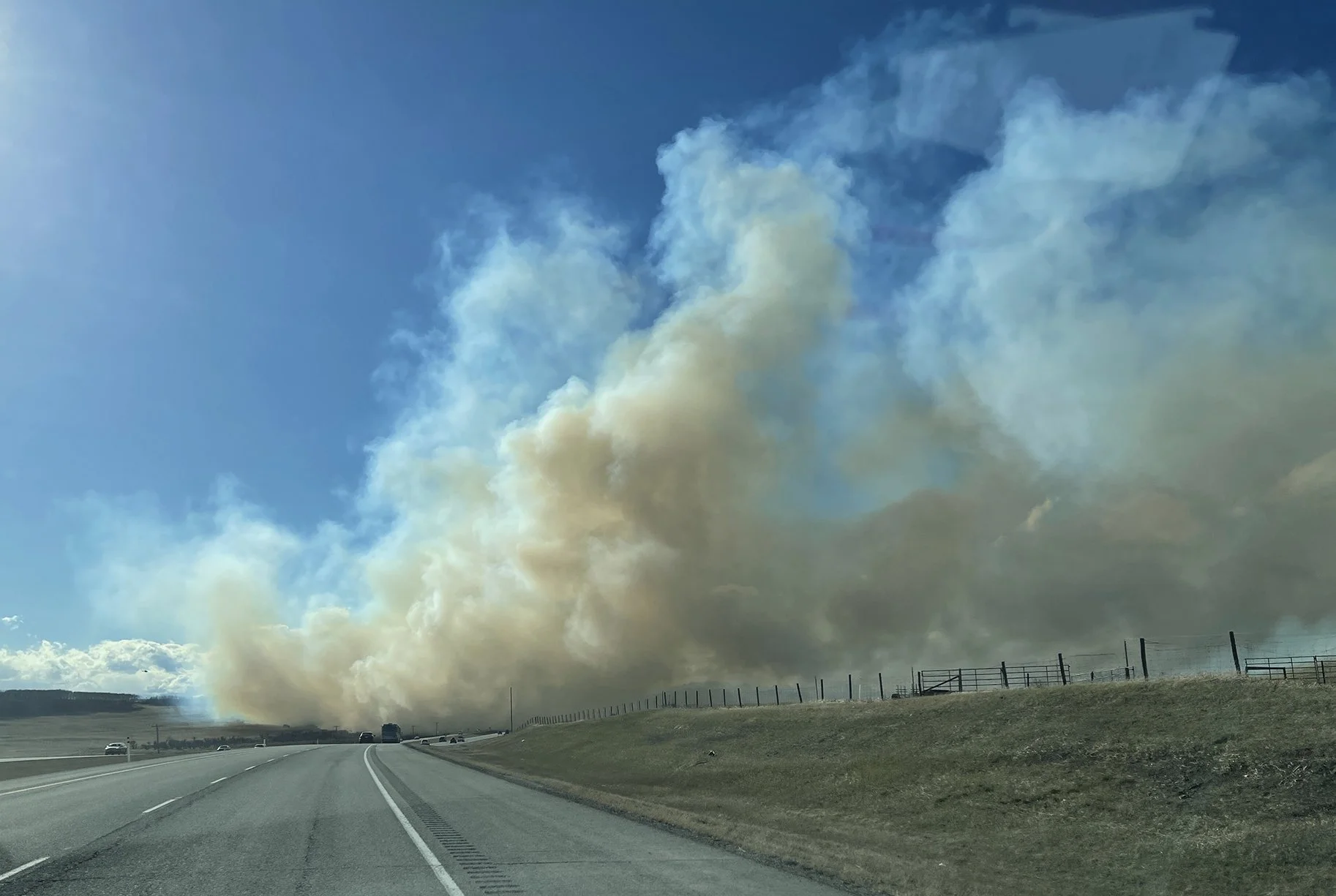
White Smoke, Highway 1 Alberta. Digital Photograph.
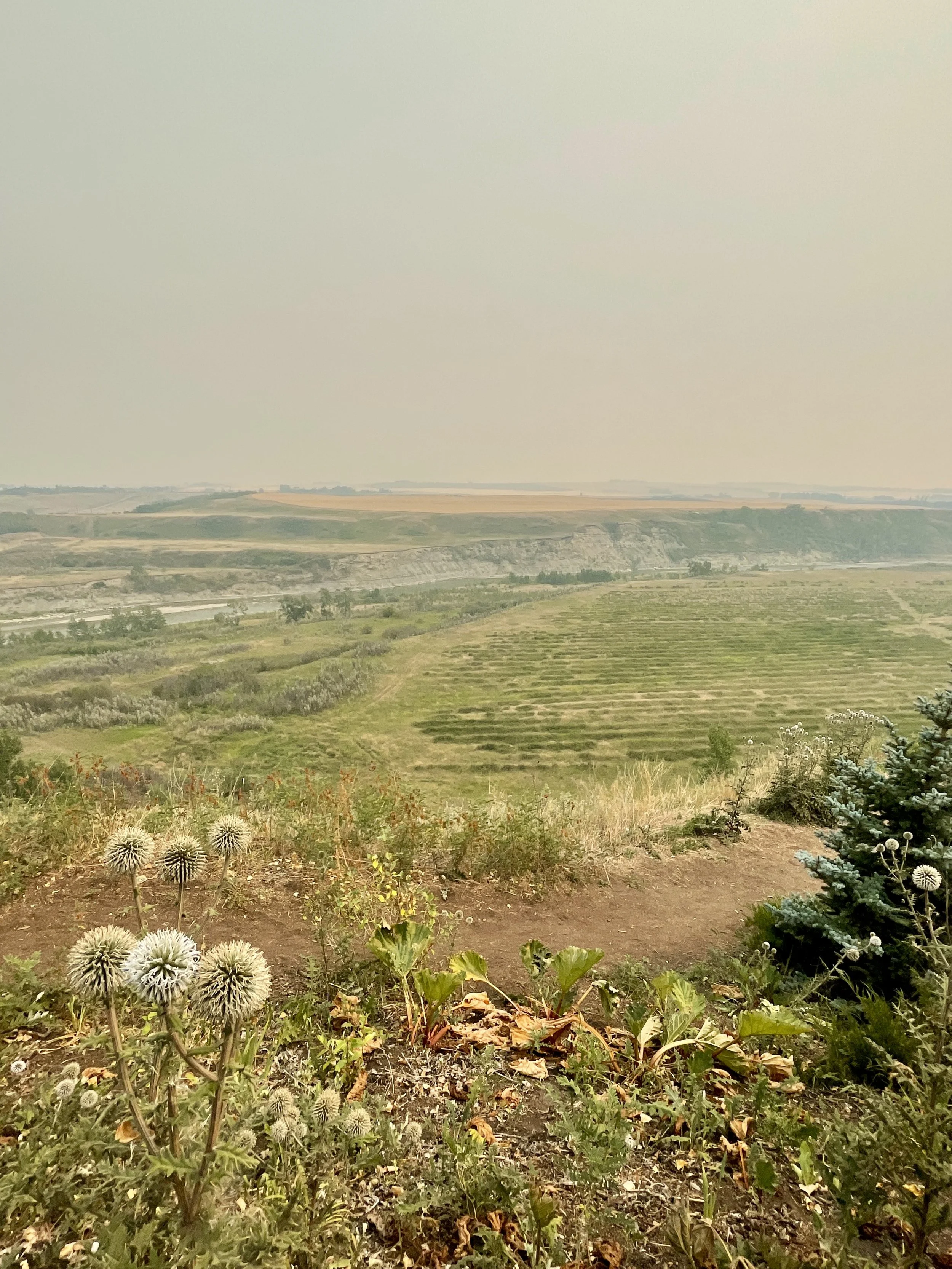
South Wind. Highway 2 South Alberta. Digital Photograph.
Plume: Smells Like Summer
2020-2024
The title of this series reflects a conversation with family pre-teens and teens over the years. When adults spoke about being bothered by frequent wildfire smoke, kids remarked that they didn’t mind it because “it smells like summer’.
This comment seemed startling to us adults and became the impetus for this series of forest-fire related landscapes within Alberta and B.C.
I would like to respectfully acknowledge that I live, work and play in Kimberley (k̓ukamaʔnam) and surrounding lands where much of this ongoing project has been taking place. It is located on the unceded traditional territory of the Ktunaxa (?amak?is) Nation as well as nearby Kinbasket (Secwepemc), Syilx, and Sinixt Peoples.
In the spirit of reconciliation, I acknowledge that I live, work and play on the traditional territories of the Blackfoot Confederacy (Siksika, Kainai, Piikani), the Tsuut’ina, the Stoney Nakoda Nations (Chiniki, Bearspaw, Goodstoney), the Otipemisiwak Métis Government (Districts 5 and 6), and all people who make their homes in the Treaty 7 region of Southern Alberta where some of this work has been taking place.
In air quality terminology, a plume refers to a visible or invisible column of smoke and pollutants released into the atmosphere from sources like wildfires. In Canada, wildfire smoke plumes can carry fine particulate matter (PM₂.₅), carbon monoxide, nitrogen oxides, and volatile organic compounds over vast distances, affecting air quality in regions far from the fire's origin. The dispersion of these plumes depends on factors such as wind speed, atmospheric stability, and the buoyancy of the emitted pollutants. Monitoring and modeling wildfire plumes are essential for predicting air quality impacts and assessing potential health risks.
Environment and Climate Change Canada. "Air Quality Model Forecast Maps." Government of Canada, 2025, https://weather.gc.ca/firework/.