Blindspot 2014-2016
I would like to acknowledge that the land I visited and photographed for this project is in traditional Mi’kmaw territory. I acknowledge and respect the diverse histories and cultures of the Beothuk, Mi’kmaq, Innu, and Inuit of Newfoundland and Labrador.
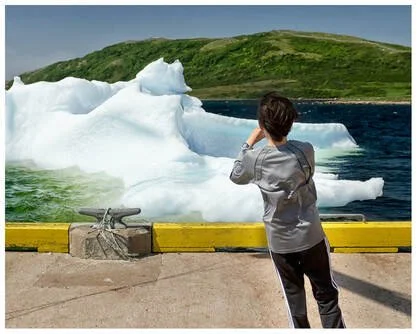
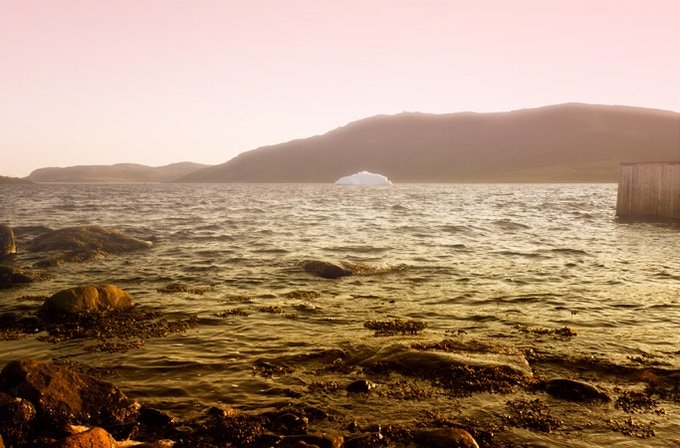
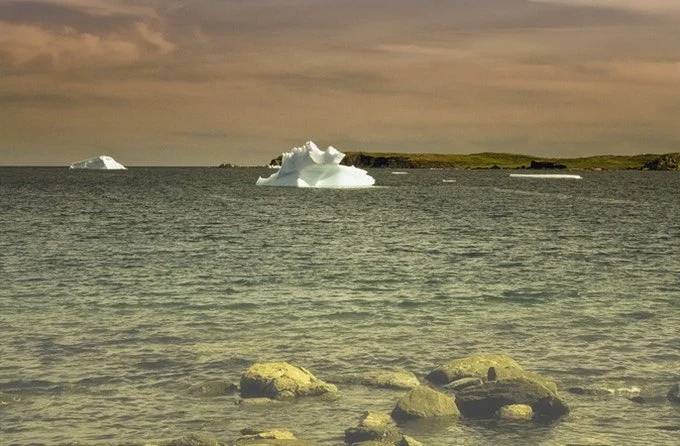
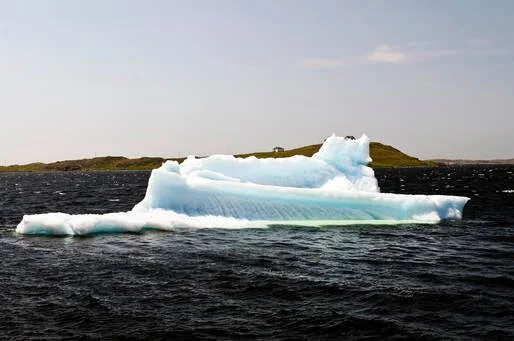
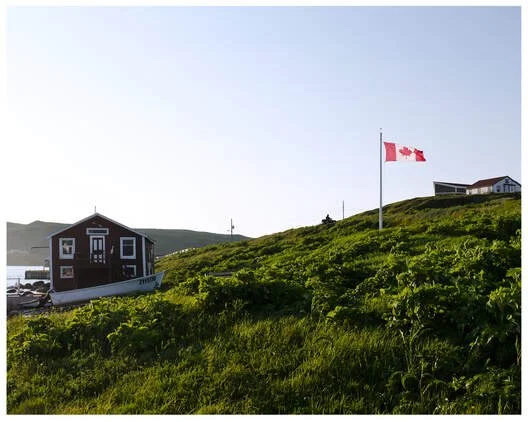
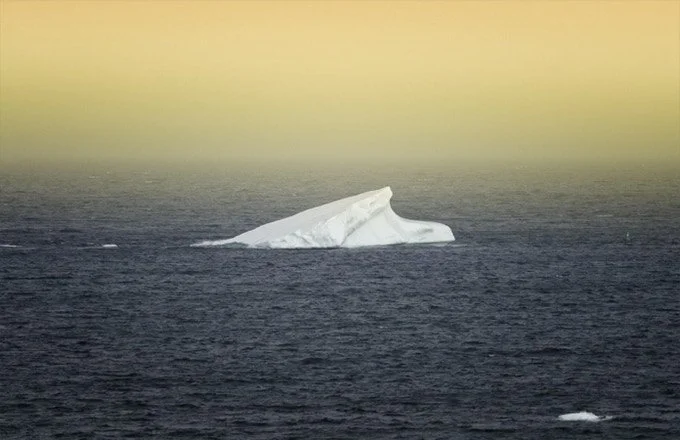

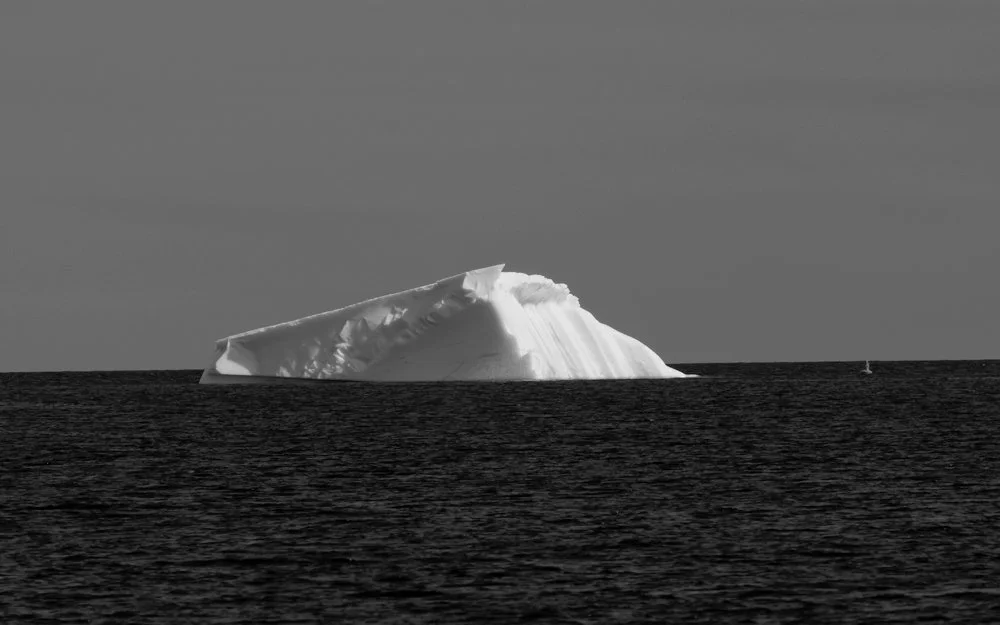

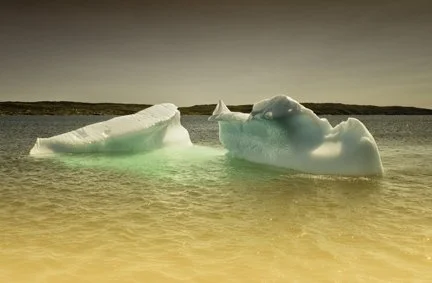
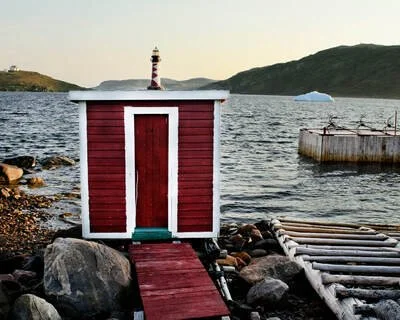
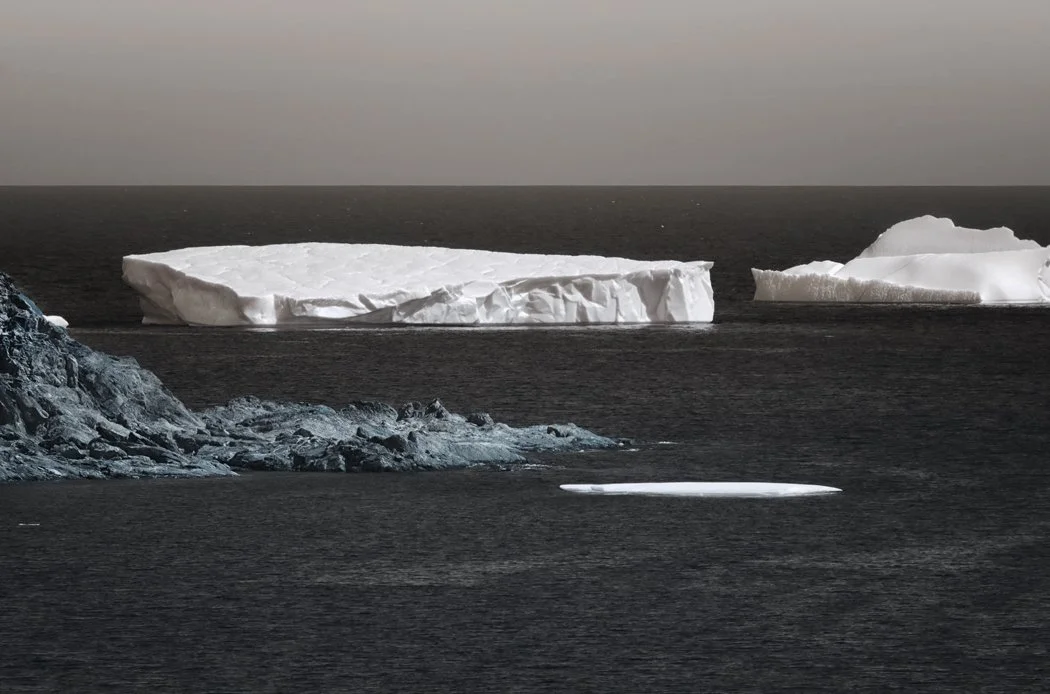
Davis Straight - Labrador Current, 2014-2016
The majority of icebergs found off the coast of Newfoundland and Labrador are said to have calved from the massive ice sheets in Greenland. Thousands of years old, these ancient drifters consist of pure, fresh water and have travelled along the Labrador Current for approximately 2 - 3 years to reach their final destination along the Canadian East Coast. It is becoming quite common now to see sublime renditions of Arctic and Sub-Arctic landscapes from internationally based art photographers. The poles are reportedly warming at “nearly twice the rate of the rest of the planet” and many artists have travelled to the far north to bear witness to the landscapes and ice sheets affected by such incredible change (www.cfr.org). Blindspot however, is a series of photographs taken at the end point of the iceberg migration—it depicts glacial landscapes along Iceberg Alley in Canada, a location that has attracted iceberg watchers for decades.
I believe that images of Arctic sublime beauty can give us the false impression that glacial landscapes and seascapes are 'out-of-this world' when in fact, they are more aptly thought of as central to Canadian and global societies. Although photographs can make them appear to be silent, static and beautiful objects, icebergs are actually on the move daily. They exist here, along our own Canadian coastlines, and there they melt and break apart steadily, and pose a threat to sea vessels. When drifting in northern regions they provide a means of transport for seals and polar bears at certain times of year. Importantly, they are also indicators of environmental change at our ice caps, and provide unique climate data for scientists.
The photographs in this series are colourized in nearly real hues that invite the viewer to become caught up in the atmosphere created. The colours that I've embellished each scene with are derived from nature and represent change. Economic, cultural, and environmental change ripples through Canadian landscapes and cultures over time. In addition to being beautiful, even mysterious, these images invite the viewer to think more deeply about the places from which they come. Basque Whalers, Viking explorers and Beotuk peoples formerly inhabited these lands. The Beothuk people, Indigenous to Newfoundland, became extinct as a culture in 1829 (due to loss of traditional lands, resources and European diseases) . Inuit, Innu and First Nations peoples along with Canadian settlers and newcomers continue to make their lives here.
Just beyond the southern-most point of Iceberg Alley, the Titanic sank in 1912 after fatally colliding with an iceberg that was near the end of its southward journey. Numerous other ships throughout Iceberg Alley have been damaged and lost due to ice encounters, and after the Titanic tragedy, the International Ice Patrol was finally established to protect vessels in the area. Today, Newfoundland and Labrador are finding commercial success with iceberg tourism, an Iceberg Festival and even Iceberg Vodka production, all of which help to sustain the economy after the 1992 Cod fishing moratorium.
Thus Canada’s Eastern coastal economies are deeply connected to colonial history, and to our Greenlandic neighbors to the north, both in terms of coastal navigation systems and economic initiatives—each deriving from our relationships with place and ice. This series then, through an exaggeration of unreal appearances, is an attempt to reconstitute Arctic and Sub-Arctic landscape and seascape photography in a way that will invite conversation about real places, and real changes that are upon us. Because Sub-Arctic and Arctic landscape imagery can be so very spectacular, the lands are often thought of in metaphoric terms; blank canvases to be filled with distant or futuristic stories. Yet, it is important for us to take a wider view of land and seascapes and to consider local and historical connections that lie within our sight. These connections ask us to remember that places are not just a “backdrop” to our daily activities but rather give form and substance to our lives.
To be inspired or awed by incredible (and often unfamiliar) masses of glacial ice is surely to be expected. But to reflect a while on the path that the ice has taken, and the lives lived over thousands of years in its making, and the reality of living daily life within and amidst spectacular natural formations and local history is perhaps what is truly sublime.
-Kristine Thoreson